Trust Your Gut. Literally.
Trust Your Gut. Literally. –
Your microbiome quietly shapes immunity, mood, and metabolism
It’s not just a feeling—it’s science. Your gut microbiome controls everything from how you digest food to how you handle stress.
If you’re constantly feeling tired, bloated, or moody, your "inner world" might be trying to tell you something.
We’re diving deep into the science of the microbiome. Find out why experts call it the body’s most underrated organ.
The Gut Microbiome: A Microscopic World Shaping Your Health
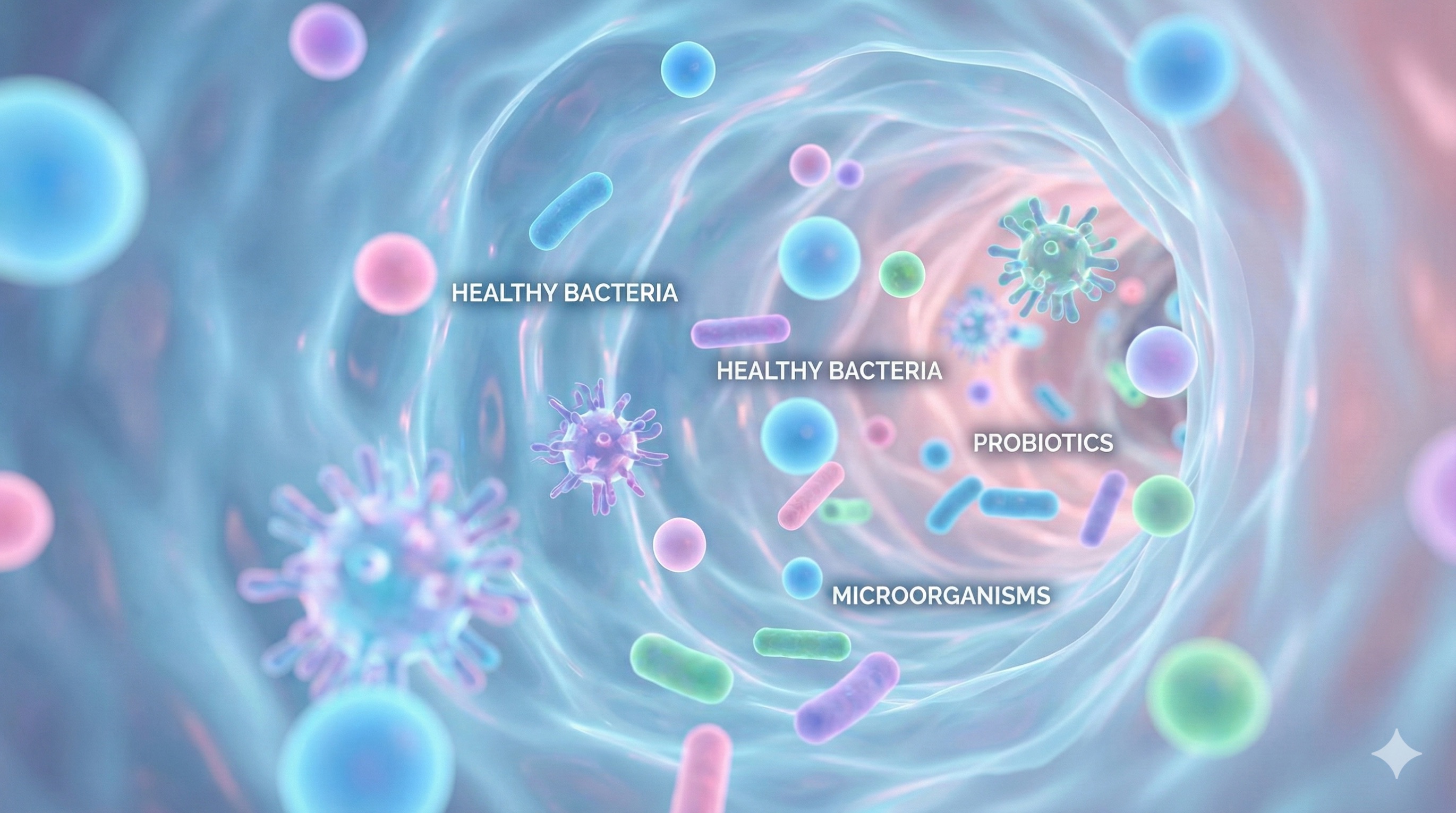
The Gut Microbiome is essentially a microscopic world hidden within your body. Trillions of microorganisms don't just reside there; they interact with one another and shape the environment of your digestive tract.
More importantly, they have a massive influence on your overall well-being, affecting everything from your digestion to systems far outside your gut.
What Does the Gut Microbiome Do?
Your gut microbiome plays such an active role in assisting bodily functions that many healthcare providers describe it as being "almost like an organ itself." Here is how it functions across key systems:
1. Digestive System
Gut bacteria are the key to breaking down nutrients that your body cannot process alone.
• Breaking Down Fiber: They help break down complex carbohydrates and dietary fibers, converting them into short-chain fatty acids (SCFAs)—vital nutrients that nourish your gut lining.
• Vitamin Production: These microbes provide the enzymes necessary to synthesize essential vitamins, including Vitamin B1, B9 (folate), B12, and K. Deficiencies in these micronutrients can significantly impact your health.
• Bile Recycling: They help metabolize bile so it can be reabsorbed and recycled by the liver (a process called enterohepatic circulation). If this fails, your body struggles to digest fats, and cholesterol levels may rise.
2. Immune System
Did you know that up to 80% of your body’s immune cells are located in your gut?
• Immune System Training: Beneficial microbes "train" your immune system to distinguish between friend and foe.
• Fighting Pathogens: Good bacteria compete with harmful types for space and nutrients, preventing chronic infections like C. difficile and H. pylori.
• Reducing Inflammation: The short-chain fatty acids produced by good bacteria help maintain the gut barrier and possess anti-inflammatory properties, potentially lowering the risk of autoimmune diseases and other conditions.
3. Nervous System
Your gut communicates with your brain through a network called the "Gut-Brain Axis."
• Neurotransmitter Production: Certain bacteria produce or stimulate the production of neurotransmitters like Serotonin, which directly affects your mood.
• Mental Health Connection: Researchers are actively investigating how the microbiome influences neurological conditions, nerve pain, and mood disorders.
4. Endocrine System
Your gut acts as the body's largest endocrine organ.
• Regulating Metabolism: Cells in the gut lining interact with microbes to secrete hormones that regulate blood sugar, hunger, and satiety.
• Link to Metabolic Syndrome: There is a growing link between specific gut microbiota and Metabolic Syndrome (obesity, insulin resistance, and Type 2 diabetes), as well as fatty liver disease.
Conclusion
Your gut health is the foundation of your overall health. Maintaining a balanced microbiome isn't just about digestion—it's about supporting your immunity, your brain, and your metabolism to function at their best.
เจาะลึก "Gut Microbiome": โลกใบจิ๋วในลำไส้ กับบทบาทสำคัญต่อสุขภาพ
Gut Microbiome (กัต ไมโครไบโอม) หรือจุลินทรีย์ในลำไส้ เปรียบเสมือนโลกใบเล็กที่ซ่อนอยู่ในร่างกาย จุลินทรีย์นับล้านล้านตัวเหล่านี้ไม่ได้แค่อาศัยอยู่เฉยๆ แต่ส่งผลกระทบต่อกันและกัน รวมถึงส่งผลต่อสภาพแวดล้อมภายในระบบทางเดินอาหารด้วย
มากกว่านั้น จุลินทรีย์กลุ่มนี้ยังมีอิทธิพลต่อสุขภาพโดยรวมอย่างมหาศาล ทั้งในระบบย่อยอาหารและระบบอื่นๆ ทั่วร่างกาย
Gut Microbiome ทำหน้าที่อะไรบ้าง?
จุลินทรีย์ในลำไส้ทำงานร่วมกับระบบต่างๆ ของร่างกายและช่วยขับเคลื่อนกลไกชีวิต จนแพทย์และผู้เชี่ยวชาญหลายท่านเปรียบเปรยว่า "ทำหน้าที่เหมือนเป็นอวัยวะหนึ่งของร่างกาย" ซึ่งมีหน้าที่หลักดังนี้:
1. ระบบย่อยอาหาร (Digestive System)
แบคทีเรียในลำไส้คือกุญแจสำคัญในการย่อยสารอาหารที่ร่างกายจัดการเองตามลำพังไม่ได้
• ช่วยย่อยคาร์โบไฮเดรตเชิงซ้อนและไฟเบอร์: เปลี่ยนเส้นใยอาหารให้กลายเป็น กรดไขมันสายสั้น (Short-chain fatty acids) ซึ่งเป็นแหล่งพลังงานสำคัญที่ช่วยบำรุงเซลล์เยื่อบุลำไส้ให้แข็งแรง
• โรงงานผลิตวิตามิน: จุลินทรีย์เหล่านี้มีเอนไซม์ที่ช่วยสังเคราะห์วิตามินสำคัญ เช่น วิตามิน B1, B9 (โฟเลต), B12 และวิตามิน K การขาดจุลินทรีย์ที่ดีจึงอาจทำให้ร่างกายเสี่ยงต่อภาวะขาดสารอาหารเหล่านี้ได้
• รีไซเคิลน้ำดี (Bile): ช่วยย่อยสลายน้ำดีเพื่อให้ตับดูดซึมกลับไปใช้ใหม่ (กระบวนการ Enterohepatic circulation) หากกระบวนการนี้ล้มเหลว ตับจะผลิตน้ำดีไม่ทัน ส่งผลต่อการย่อยไขมัน และทำให้คอเลสเตอรอลตกค้างในกระแสเลือดสูงขึ้น
2. ระบบภูมิคุ้มกัน (Immune System)
ทราบหรือไม่ว่า กว่า 80% ของเซลล์ภูมิคุ้มกันในร่างกายอยู่ที่ลำไส้
• เทรนเนอร์ให้ระบบภูมิคุ้มกัน: จุลินทรีย์เจ้าถิ่นที่ดีจะช่วย "ฝึกสอน" ให้ระบบภูมิคุ้มกันแยกแยะได้ว่าสิ่งใดคือมิตร สิ่งใดคือศัตรู (เชื้อโรค)
• แย่งพื้นที่เชื้อร้าย: จุลินทรีย์ที่ดีจะคอยแย่งที่อยู่และแย่งอาหาร ทำให้เชื้อโรคตัวร้ายไม่มีที่ยืน ช่วยป้องกันการติดเชื้อเรื้อรังในทางเดินอาหาร เช่น C. difficile หรือ H. pylori
• ลดการอักเสบ: กรดไขมันสายสั้นที่จุลินทรีย์ที่ดีผลิตออกมา จะช่วยเสริมเกราะป้องกันลำไส้ไม่ให้สารพิษรั่วไหลเข้ากระแสเลือด และมีฤทธิ์ต้านการอักเสบ ซึ่งช่วยลดความเสี่ยงของโรคแพ้ภูมิตัวเองและโรคมะเร็งบางชนิด
3. ระบบประสาท (Nervous System)
ลำไส้สื่อสารกับสมองผ่านเครือข่ายที่เรียกว่า "แกนลำไส้-สมอง" (Gut-Brain Axis)
• ผลิตสารสื่อประสาท: แบคทีเรียบางชนิดสามารถผลิตหรือกระตุ้นการสร้างสารสื่อประสาท เช่น เซโรโทนิน (Serotonin) ซึ่งส่งผลโดยตรงต่ออารมณ์และความสุข
• ผลต่อสุขภาพจิต: งานวิจัยปัจจุบันกำลังศึกษาความเชื่อมโยงระหว่างจุลินทรีย์ในลำไส้กับโรคทางระบบประสาท อาการปวดเส้นประสาท รวมถึงความผิดปกติทางอารมณ์และพฤติกรรม
4. ระบบต่อมไร้ท่อ (Endocrine System)
ลำไส้ถือเป็นอวัยวะในระบบต่อมไร้ท่อที่ใหญ่ที่สุดในร่างกาย
• ควบคุมเมตาบอลิซึม: เซลล์ในลำไส้ (Enteroendocrine cells) ทำงานร่วมกับจุลินทรีย์ในการหลั่งฮอร์โมนที่ควบคุมระดับน้ำตาลในเลือด ความหิว และความอิ่ม
• ความเชื่อมโยงกับโรคอ้วน: นักวิจัยกำลังศึกษาความสัมพันธ์ระหว่างจุลินทรีย์ในลำไส้กับภาวะ Metabolic Syndrome (โรคอ้วน, ภาวะดื้ออินซูลิน, เบาหวานชนิดที่ 2 และภาวะไขมันพอกตับ ซึ่งพบว่ามีความเกี่ยวข้องกันอย่างมีนัยสำคัญ
บทสรุป:
สุขภาพของ "ลำไส้" คือรากฐานของสุขภาพ "ร่างกาย" การดูแลจุลินทรีย์ในท้องให้สมดุลจึงไม่ใช่แค่เรื่องของการขับถ่าย แต่คือการดูแลระบบภูมิคุ้มกัน สมอง และระบบเผาผลาญให้ทำงานได้อย่างปกติและมีประสิทธิภาพ